
Camden Hall/NurPhoto via Getty Images
- New data showed consumer sentiment slipped to a record low in April.
- Rising gas prices are affecting people's view of the economy.
- Other economic issues, like the frozen job market, are probably worsening the dreariness.
Americans' economic mood can be succinctly described in one word: Terrible.
While inflation soars as conflict with Iran drags on and shows up at the gas pump, consumer sentiment is plummeting. University of Michigan's Consumer Sentiment Index, which tracks how American consumers feel about economic conditions, fell to 47.6 in April — a record low and a nearly 11% decline month-over-month.
The overall sentiment index combines views of how the economy is doing right now with what Americans think is going to happen in the near future, and both crashed this month.
"Demographic groups across age, income, and political party all posted setbacks in sentiment, as did every component of the index, reflecting the widespread nature of this month's fall," Joanne Hsu, University of Michigan's director of surveys of consumers, said in a release.
It's not the first time in recent years that sentiment has tanked at the same time costs spike. The last low was in June 2022, at 50, when inflation rose to 9.1%, and gas prices hit record highs amid Russia's war in Ukraine and a broader inflationary spiral.
Now, sentiment is worse than the plunges seen in the wake of the Great Recession and the COVID-19 pandemic. Some of that can likely be chalked up to the very real, immediate price hikes showing up at the pump. New consumer price index data showed gas prices increased by a record 21% over the month in March, and accounted for about three-fourths of the overall monthly CPI increase of 0.9%.
"Much higher gasoline prices, the lower stock market, and volatile news headlines are biting down on consumer sentiment," said Nationwide economist Oren Klachkin. "We don't see sentiment recovering in short order since high gas prices are likely to stick around at least in the short term, adding to ongoing cost of living frustrations."
Beyond gas, the trickle-down effect of rising oil and energy prices has shown up in everyday purchases and has tampered with Americans' vacation planning — something likely to lead to a more dreary outlook.
"Airlines are raising prices because of higher jet fuel," Gbenga Ajilore, chief economist at the Center on Budget and Policy Priorities, said. "Transportation costs are rising because of higher diesel prices which filter into the goods we pay for with Amazon, UPS, FedEx."
The general malaise may also be exacerbated by a dreary jobs outlook. Consumers' assessments of their own personal finances fell by 11%, according to the University of Michigan's survey, and Americans surveyed by the Federal Reserve Bank of New York increasingly don't think they'd find a new job in the next three months if they lost theirs today.
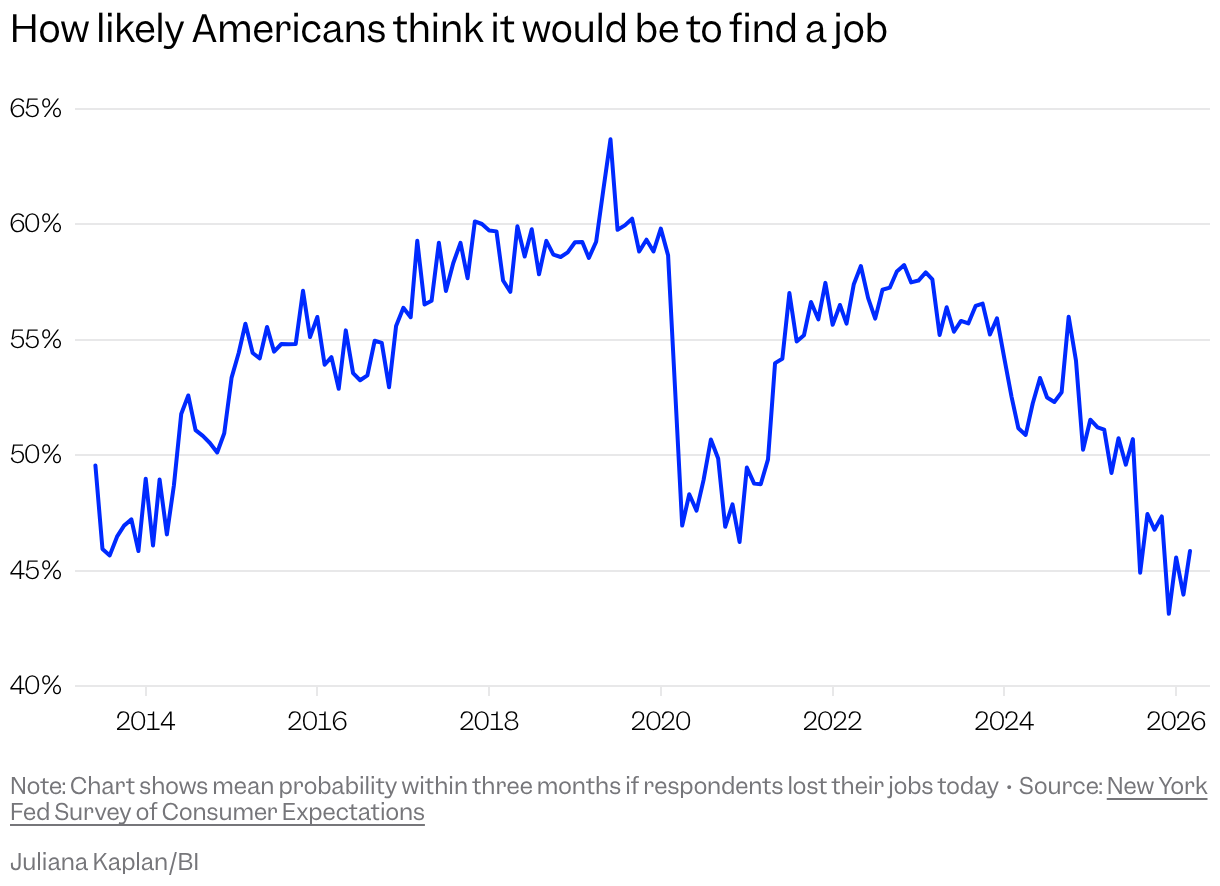
Dreary sentiment might be here to stay as the effects of the conflict with Iran keep prices high and drag on the economy.
"Even if the prices of gasoline and diesel start to come down after the conflict resolves, the effect on the economy will be more long-lasting," Stephen Kates, a financial analyst at Bankrate, said. "Fuel prices will not fall as quickly as they rose."
Do you have a story to share about how rising prices and volatility are affecting your economic outlook? Contact these reporters at jkaplan@businessinsider.com and mhoff@businessinsider.com.