
Rebecca Noble/Bloomberg via Getty Images
- A report from UNLV's Lied Center for Real Estate shows housing permits are stalling across America.
- Some states are seeing increases, while others lag behind, which might impact future housing supply.
- States like South Carolina, Idaho, and North Carolina lead in permits that may further ease prices.
The US housing pipeline is stalling — an indicator that affordable housing may remain hard to find nationwide.
From January to August 2026, housing permits remained "essentially flat" nationwide, with a 0.05% increase since 2025, but a 4.1% drop since 2023, according to an October research report from the Lied Center for Real Estate at the University of Nevada, Las Vegas.
"We are doing a terrible job building housing," said Nicholas Irwin, coauthor of the report and research director at the Lied Center for Real Estate. "Some states are doing better than others, but across the nation, there are a lot of places that are really falling behind."
States like New York have seen an increase in permits; others like Nevada have fallen:
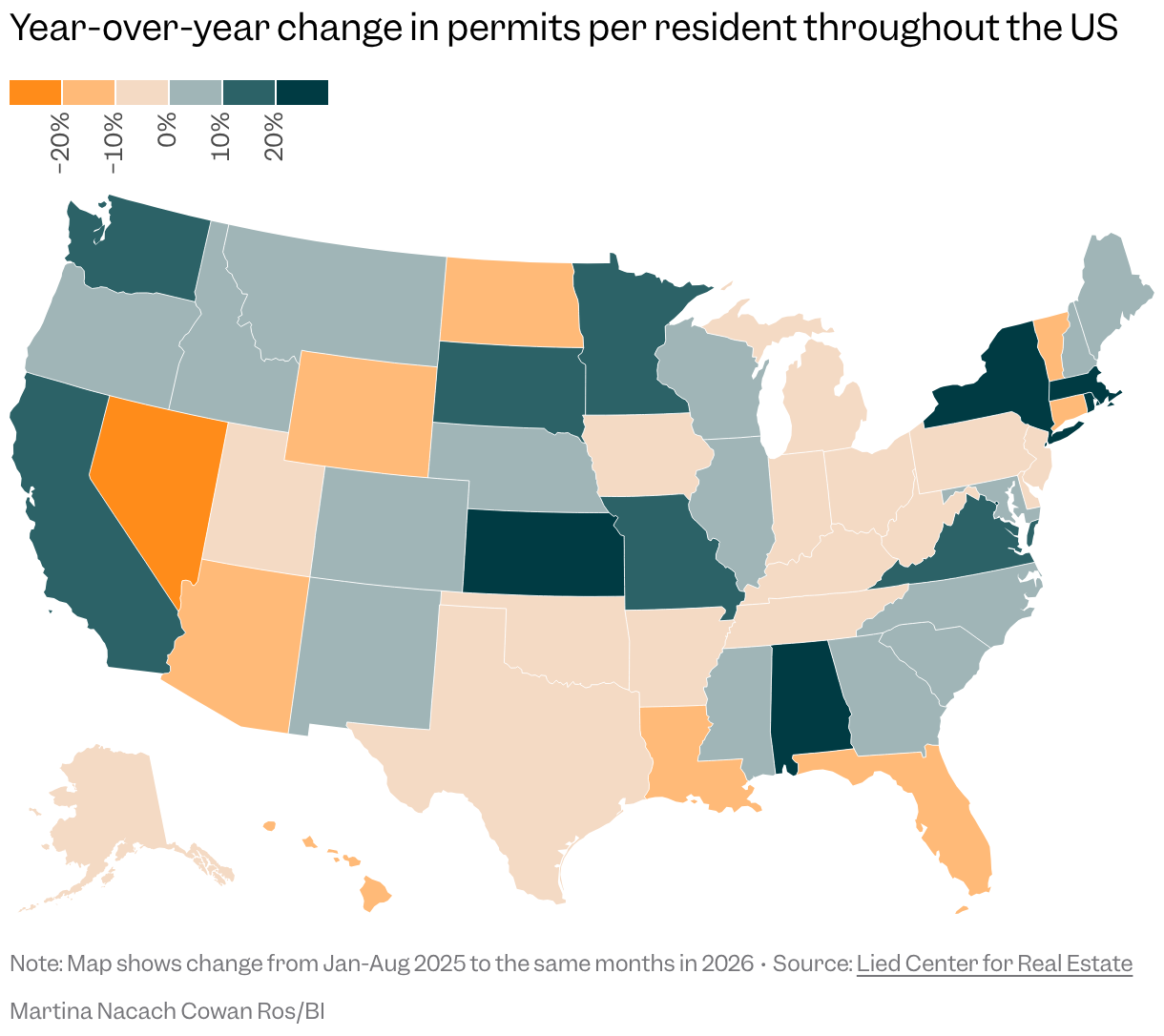
Business Insider has reported on how Americans are finding it increasingly hard to afford housing. Tracking permit growth helps estimate how much housing might become available across the country in the coming years.
"If we don't have that housing available for people to absorb as new households form, then that is going to be a serious drag on affordability and future economic growth," Irwin said.
Some states are doing better than others
A total of 968,187 permits were issued nationwide from January to August 2026, according to the report. This is about 2.83 permitted units per 1,000 residents in the US. Permits for single-family homes account for 64%, and 32% are for multifamily homes.
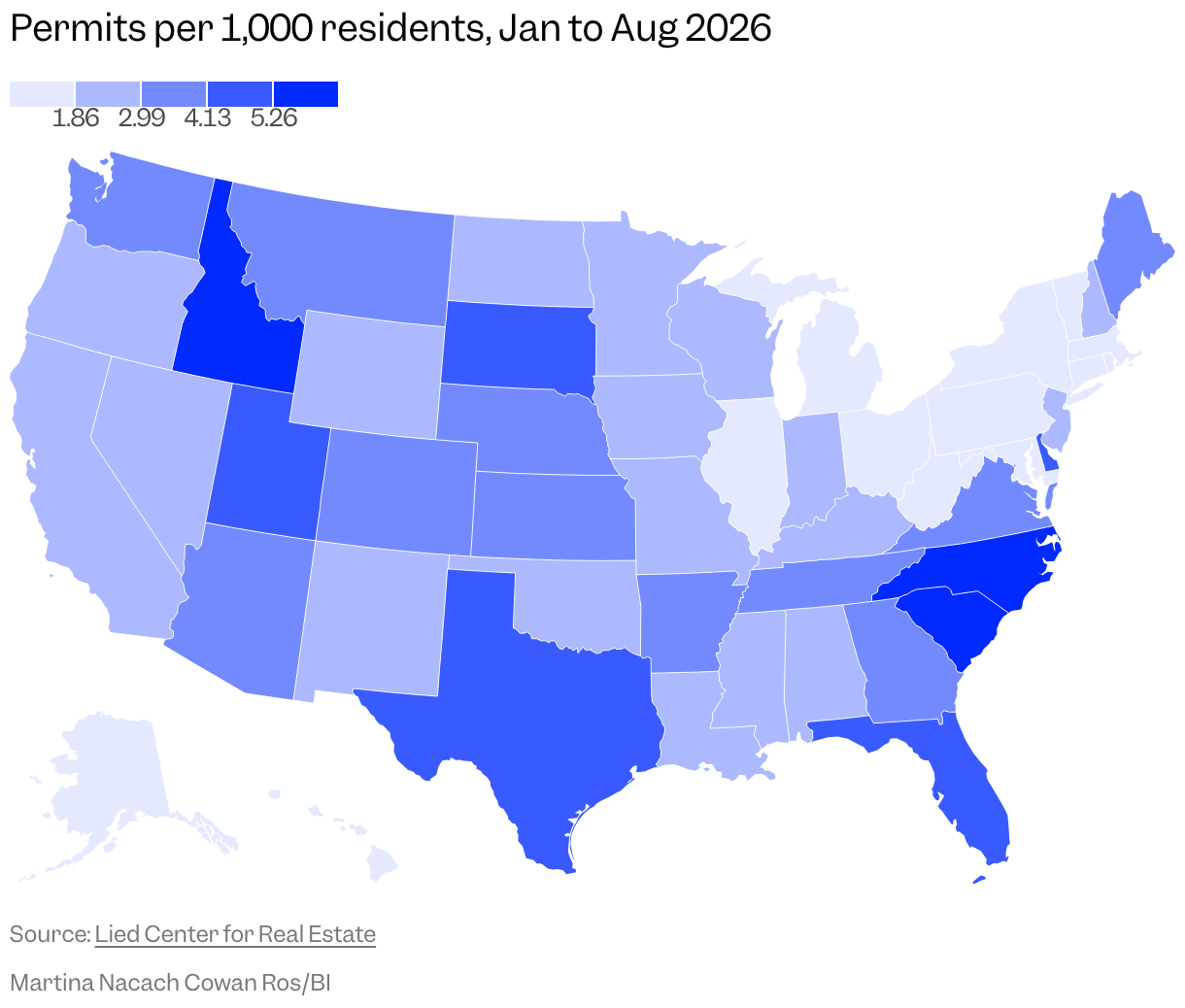
Yet, a few states continue to approve housing permits at higher rates.
South Carolina, Idaho, and North Carolina have the highest permit rates per 1,000 residents, at least double the national average.
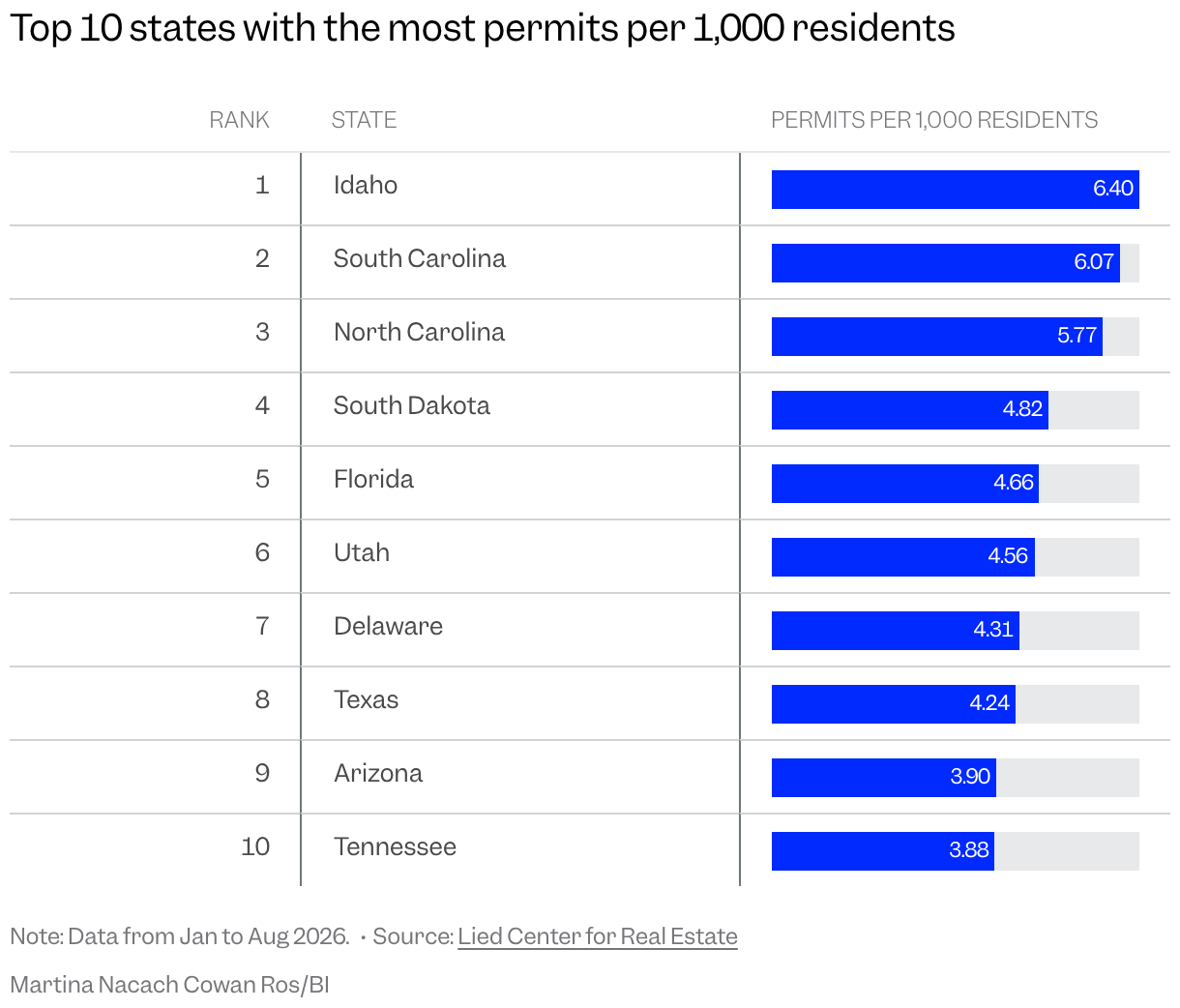
Irwin noted that those states could see a slowdown in prices in the longer run.
"That means hopefully, as wages continue to grow year over year, and the amount of building you're doing is putting downward pressure on housing prices, housing naturally becomes more affordable," he said.
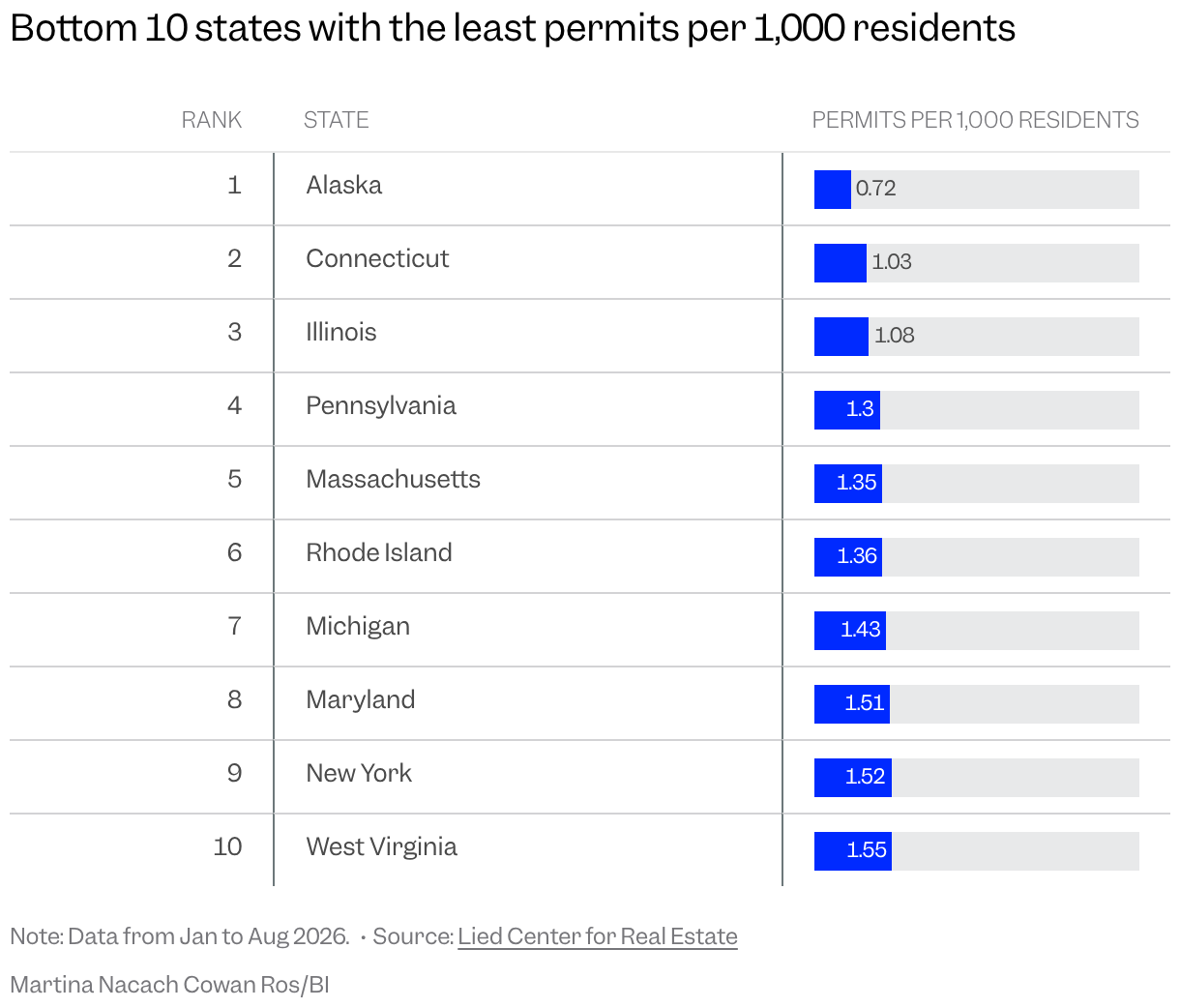
On the other end of the scale, Alaska, Connecticut, and Illinois had the lowest rates of permits per capita among the states:
The report also compared the income required to afford each state's median-priced home with the median income of homeowner households. California saw the biggest gap: Median homeowner income is at $138,800, $84,900 short of what is needed to afford a California median-priced home.
Meanwhile, in other states like Iowa, the typical homeowner earns $22,300 above the required income to access a median-priced home. In 31 states, the median homeowner earns less than what is needed to afford a median-priced home, the report said.
Irwin said states should continue building all types of housing to boost affordability. One way to do that is to provide incentives through local policy, considering every state is different.
"All of our individual states are laboratories for democracy, as the saying goes," he said. "Some states have taken a much different approach to how they allow the building of housing and how involved local governments can be in blocking housing."