
Emma McIntyre/Getty Images for Sony Pictures Entertainment
- How do Americans really feel about influencers?
- Morning Consult surveyed about 2,000 US adults exclusively for Business Insider.
- Here are four stats influencer marketers should know — including who trusts influencers the most.
Influencer marketing is ultimately powered by one thing: people's feelings.
Whether you hit "buy" on an item an influencer is promoting could come down to how much you trust that creator.
We wanted to get a gut-check on how Americans feel about influencers. Morning Consult conducted research exclusively for Business Insider and surveyed about 2,000 US adults in September about overall trust, purchase decisions and regrets, politics, and sponsorship disclosures.
The biggest takeaway: Feelings about influencers — especially trust — vary greatly by income and generation.
For instance, baby boomers often find influencers "annoying." Gen X, millennials, and Gen Z, on the other hand, say they feel "entertained" by them.
A lot is at stake. Advertisers are expected to spend $44 billion on creators in the US in 2026, per the Interactive Advertising Bureau.
Here are four key stats from Morning Consult's survey on influencers.
1. Higher-income social media users are more likely to trust influencers
More money, more loyalty — when it comes to trusting influencers.
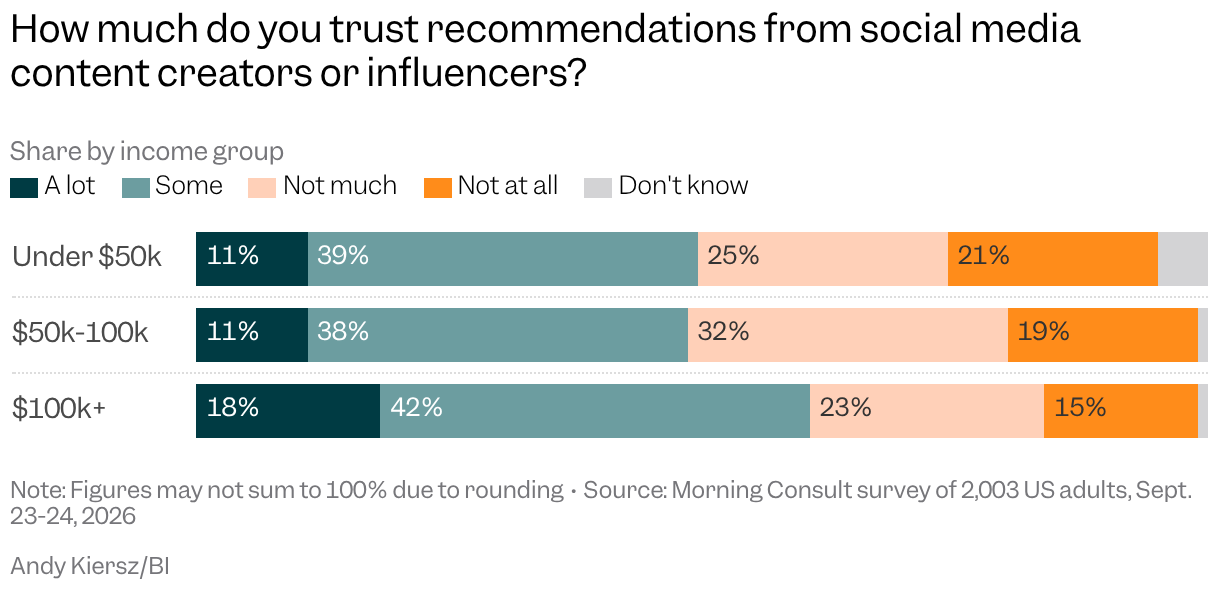
According to Morning Consult's survey, 61% of high earners — those making over $100,000 — trust influencer product recommendations. These high earners are also more likely to be politically swayed by creators and want to become influencers themselves.
For those earning less than $100,000, that trust fell to about 50%.
In part, that's because higher earners can better relate to some creators' lifestyles, industry insiders said.
Amanda Acevedo, director of talent at G&B Digital Management, told Business Insider that the "general population online knows creators make good money for themselves."
Meanwhile, creators and marketers alike are tempering the luxury overload — like hauls or gift unboxings — as financial realities their followers face ebb and flow.
"When you are making more money, you don't view them as out of touch because you can relate to it a bit more — you have more spending power," said Natalie Barbu, founder of Rella and a former lifestyle influencer.
2. Only 31% of baby boomers 'at least somewhat' trust influencers
There's a generational divide in attitudes toward influencers.
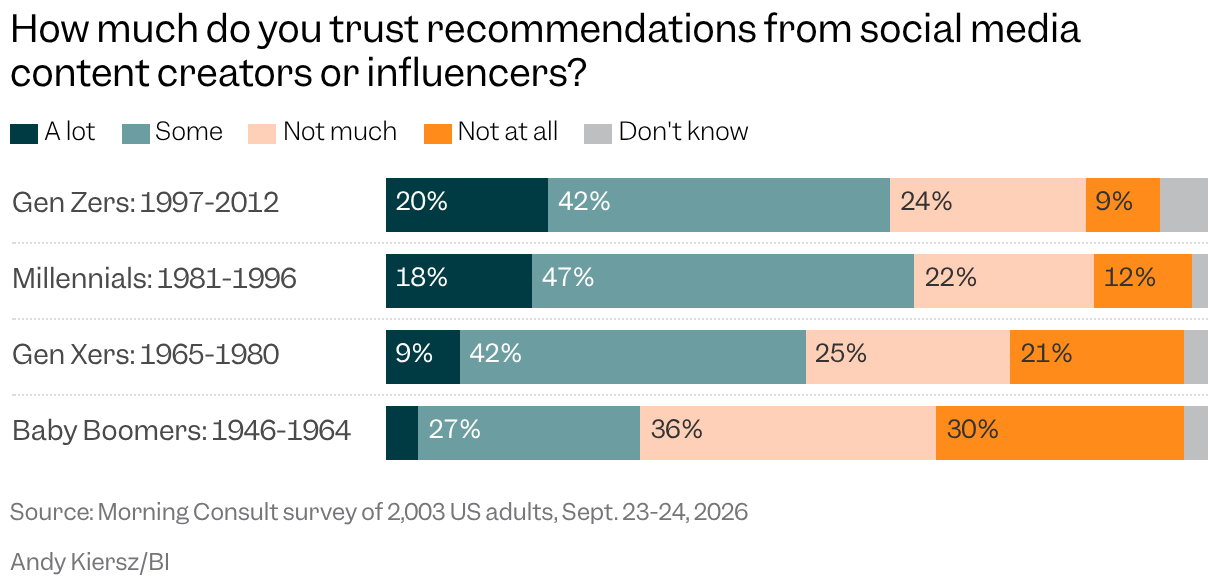
Baby boomers (born between 1946 and 1964) are more distrustful of influencers compared to millennials (1981 to 1996) and Gen Z (1997 to 2012).
According to Morning Consult's survey, 31% of boomers said they trust influencer recommendations at least somewhat, compared with 62% of Gen Z and 64% of millennials.
Still, they aren't immune to influencer marketing, according to Lucy Kruszynski, global head of brand at influencer marketing agency Buttermilk.
"Brands need to think about how creators can build credibility through consistent content over time," she told Business Insider.
3. 69% of US adults think paid promos should be disclosed — but only 25% think influencers are actually doing so consistently
Knowing that you are watching or seeing an ad is very important to US consumers. Influencers who don't disclose such details risk losing the trust of their audiences.
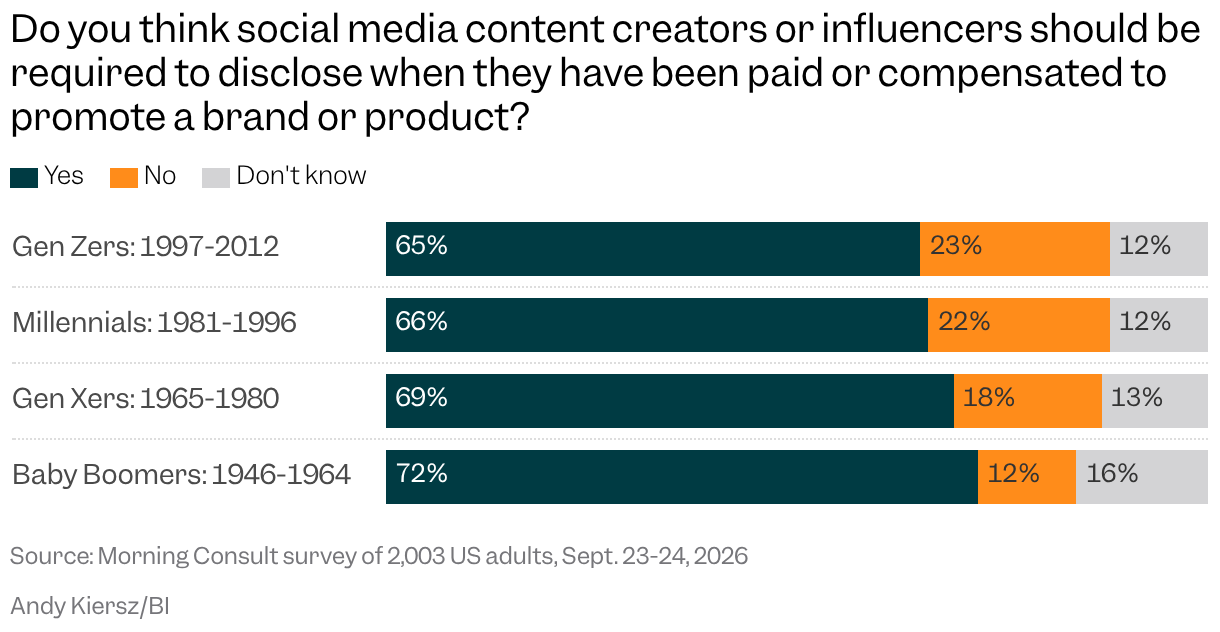
Morning Consult found that 69% of US adults want to see disclosures on sponsored influencer content. However, only 25% actually believe influencers are disclosing these partnerships consistently.
That perception might not be reality.
A survey of content creators conducted by SheSpeaks found that 14% of creators said they didn't always disclose brand ties. According to the same SheSpeaks data, 18% of surveyed creators said that a brand had explicitly requested that they not disclose a partnership.
4. Influencers aren't just driving purchases — 26% of US adults say influencers have swayed their votes
Influencer content has the power to move the political dial.
According to Morning Consult, about one in four US adults said that an influencer's content had affected who they'd voted for in an election.
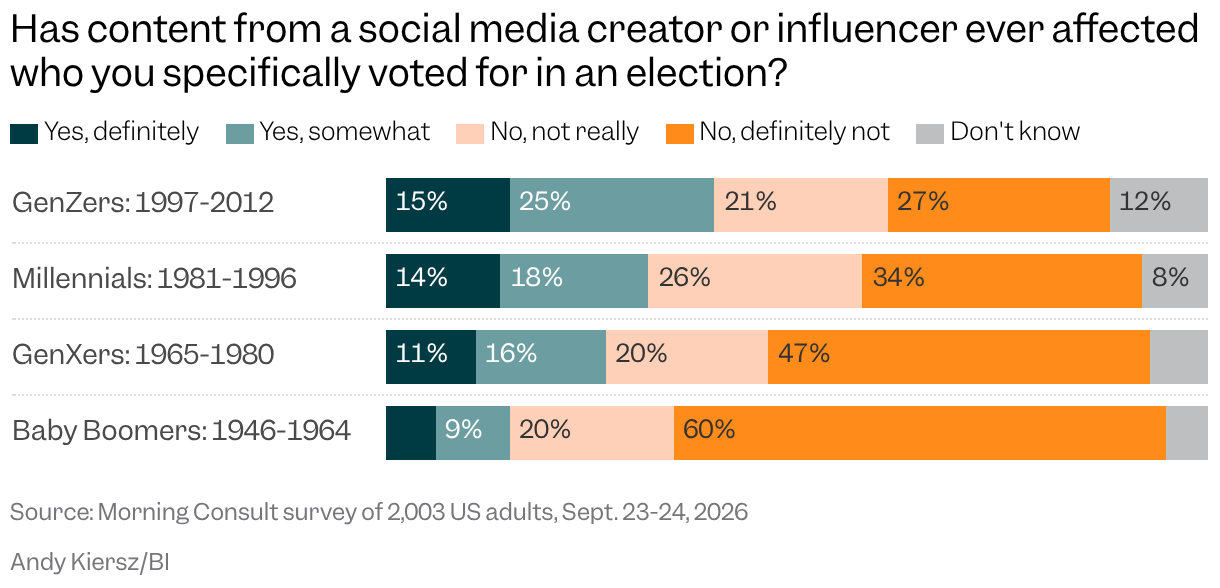
Younger Americans were more likely to be politically swayed by influencer content, too. Morning Consult found that three in four Gen Z respondents said influencers had shaped their views on political or social issues.
Influencer marketing is a "big player in this space now," said Nicole Dunger, a founding partner at the marketing firm People First, which works with candidates and advocacy groups on their creator strategies.